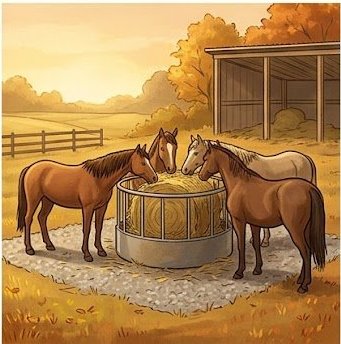
Practical, math-based guides for small farms and homesteads. Buy smarter, store drier, feed less waste.
Whether you have 2 goats or 20 cattle, hay management is the same discipline — just different math.
What to look for, what to ask, how to compare prices, and how not to get burned on a bad load.
Buying guideRound bales outside, square bales in the barn, tarps vs sheds — how to keep your investment dry and nutritious.
Storage guideSpecies-specific daily requirements. Horses, cattle, goats, sheep — how much hay each animal actually needs.
Feeding guideEnter your animals and months until spring pasture. Get a total bale count and storage space estimate.
Open calculatorTimothy, orchard grass, alfalfa, bermuda — what each is best for, and when to buy or avoid each type.
Hay typesPrint our Hay Buying Checklist before you drive to the farm. Know what to inspect, what to ask, what to avoid.
Get the checklistThe specific questions real farmers search — answered completely, with math.
For 3 horses, 5 cows, or 10 goats — a bale's lifespan depends on weight, feeder type, and weather. We do the math.
Get the numbersThe complete outdoor storage guide — gravel pads, tarp anchoring, spacing, orientation. Minimize the weather loss.
Storage guideDaily requirements by body weight, pregnancy status, and season — with a quick lookup table you can print.
Goat hay guideProtein content, fiber levels, price difference, and which of your animals actually needs which cutting.
Compare cuttingsEach species has different requirements. Find yours.
1.5–2% of body weight per day. Type, quality, and timing matter more for horses than any other livestock.
Horse hay guideBeef vs dairy, dry vs lactating — cattle hay needs vary widely by stage of production.
Cattle hay guide2–4 lbs per day for most does. Goats waste more hay than any other animal — feeder type is critical.
Goat hay guideSimilar to goats but less wasteful. Grass hay is usually sufficient; avoid high-alfalfa diets for wethers.
Sheep hay guideEnter your herd size and months until spring. Get a bale count, cost estimate, and storage space needed. No signup, no email, just math.
Everything to check before you hand over cash for a load of hay. Smell, color, leafiness, moisture flags, price-per-ton math. Print it and bring it with you.
Most hay advice online is either a university extension PDF written for commercial operations, or a forum thread where nobody agrees. HayWise is built for the person with 2 to 50 animals — practical, math-based, and written in plain English.
Every guide on this site answers one specific question completely. No padding, no upsells, no affiliate links. Just useful information.
About HayWise