Storing round bales outside without a barn is a reality for most small farms — and it doesn't have to mean massive losses. The average uncovered round bale stored on bare ground loses 25–35% of its dry matter to weather and spoilage. With a few practical steps, that number drops to 5–10%. This guide covers every element of outdoor bale storage, from site selection through tarp anchoring.
Step 1 — Choose the Right Storage Site
Site selection is the most important decision in outdoor hay storage, and it's one you can only make once per season. A poor site will defeat every other measure you take.
What to Look For
- Well-drained ground. Flat or slightly elevated ground that doesn't collect standing water after rain. Avoid low spots, areas near drainage ditches, or anywhere that stays wet for more than 24 hours after a heavy rain.
- Firm, stable soil. Soft ground allows bales to sink, increasing ground contact and wicking. Clay soils that are soft in spring can be acceptable by late summer when dried and firm.
- South or east facing. A site that gets direct sunlight in the morning dries faster after rain and overnight moisture. Avoid north-facing spots shaded by buildings or treelines that stay damp.
- Wind exposure. Some airflow is beneficial for drying — avoid completely enclosed areas. But orient your rows so the ends of bales face prevailing wind, not the sides (see Orientation section below).
- Access. You need to reach every bale with a tractor or truck. Don't stack so tight that you can't get the last bale out in February mud season.
Step 2 — Build a Proper Base (This Is the Most Important Step)
Ground contact is responsible for the majority of round bale spoilage. A bale sitting directly on soil or grass will wick moisture from below, rot from the outside of the flat ends, and develop mold throughout the bottom third within weeks in humid climates.
Option A: Crushed Gravel Pad (Best)
A 4–6 inch layer of crushed stone or compacted gravel is the gold standard for outdoor bale storage. It drains immediately, doesn't compact under bale weight, and can be reused year after year. A 40×20 foot pad (accommodating roughly 20 large bales) requires approximately 12–15 tons of material. Most gravel suppliers deliver in 10-ton increments; expect to pay $150–$350 per ton delivered depending on your region and stone type. Crushed limestone, #57 stone, or similar angular gravel works best — round river rock shifts under load.
One detail most guides skip: crown the pad slightly (2–3 inches higher in the center than the edges) to encourage water to run off rather than pool under bales. A flat pad develops puddles; a crowned pad drains.
Option B: Treated Timber Runners or Pallets
If a gravel pad isn't feasible, pressure-treated 6×6 timber runners laid perpendicular to the bale rows keep bales off the ground while allowing air circulation. Space runners 2–3 feet apart. This is significantly better than bare ground but not as durable as gravel — wood retains some moisture and degrades over several seasons.
Standard wood pallets can work in a pinch, but they deteriorate quickly under the weight of 800–1,200 lb bales and often need replacement annually. If using pallets, inspect for broken boards before each season and double-layer in high-traffic spots.
Option C: Recycled Rubber Mats
Thick rubber conveyor belt scraps or purpose-made agricultural rubber mats are increasingly available from equipment dealers. They don't drain as well as gravel but provide an air gap and prevent direct soil contact. Best used in combination with a slightly elevated, well-drained site.
What Does NOT Work
- Grass or bare dirt. Even dry soil wicks moisture. Grass underneath a bale dies within days, leaving wet organic matter against the bale's flat end.
- Plastic sheeting on the ground. Plastic traps moisture between the bale and the ground rather than allowing drainage. It actively makes the problem worse.
- Sawdust or straw. Both absorb moisture and wick it into the bale. Only use these as temporary measures for a day or two.
Step 3 — Orient Bales Correctly
Round bales shed water well from their curved sides but collect it on their flat ends. The orientation of your bale rows relative to prevailing wind and rain direction makes a measurable difference in outdoor storage losses.
Row Orientation
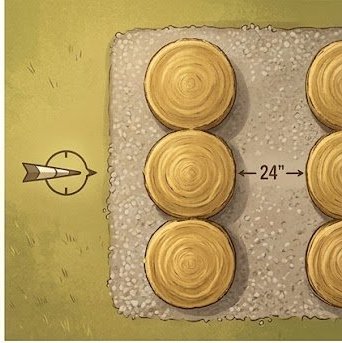
Align rows so the flat ends face the direction of prevailing weather — not the curved sides. If your prevailing weather comes from the southwest (as it does across most of the continental US Midwest and Southeast), orient rows in a northeast-southwest direction so bale ends face into the weather. Rain and wind hit the curved surface, which sheds water naturally.
Touching vs. Spaced Bales
Within a row, bales should touch side-to-side. Gaps between bales in a row create channels that catch and hold rain. Between rows, leave 24–36 inches of space — enough for air circulation and tractor access, and enough that water doesn't bridge between rows.
Step 4 — Tarps: When They Help and When They Don't
Tarping round bales is controversial among farmers — and both camps have a point. Done correctly, tarping significantly reduces top-surface moisture loss. Done incorrectly, tarping creates condensation and mold problems worse than no tarp at all.
When Tarping Helps
- High-rainfall climates (Pacific Northwest, Gulf Coast, upper Midwest)
- Storage periods exceeding 90 days
- High-quality alfalfa or mixed-alfalfa hay where nutrition preservation is critical
- Sites that can't be gravel-padded (tarp compensates partially)
How to Tarp Correctly
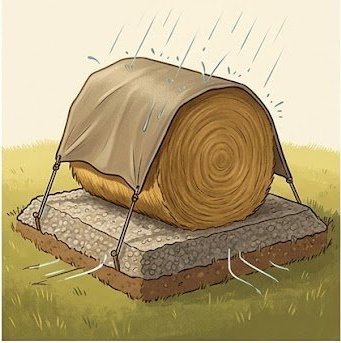
The critical rule: the tarp must allow air circulation at the sides. Never wrap a tarp completely around a round bale and seal it at the ground — this creates a greenhouse effect that accelerates mold. Drape the tarp over the top of the bale row, extending down the sides to ground level, but leave the ends open or slightly raised for airflow.
Use 6–8 mil woven poly tarps rated for agricultural use, not the thin blue tarps from hardware stores. UV degradation on cheap tarps means they're often shredded by wind within one season. Agricultural hay tarps cost more upfront but last 3–5 seasons.
Anchoring Tarps in Wind
This is where most homesteaders run into trouble. An unanchored tarp acts as a sail and will be torn off — and potentially damaged — in the first significant windstorm. Use one of these methods:
- Sandbag anchor kits designed for hay tarps. Fill them on-site with gravel or sand, attach to the tarp's grommets, and lay them along the base of the bale row. Commercial versions from Tarpmaster or TarpsNow work well; DIY versions with heavy-duty contractor bags and gravel work similarly.
- Rope lacing through grommets tied to ground stakes driven into gravel. Use ratchet straps for final tension. Check after every significant wind event.
- Bale bags (individual net-style covers that stretch over a single bale) are more expensive per bale but far more secure in high-wind areas. Available from livestock supply companies in 4×4, 5×5, and 5×6 sizes.
Expected Dry Matter Loss by Storage Method
| Storage Method | Dry Matter Loss (6 months) | Notes |
|---|---|---|
| Inside hay barn, off ground | 2–5% | Best option when available |
| Gravel pad + tarp, good technique | 5–10% | Close to barn-quality with investment |
| Gravel pad, no tarp | 8–15% | Ground problem solved; rain still hits top |
| Timber runners, tarped | 10–18% | Decent compromise |
| Bare ground, tarped poorly | 20–30% | Tarp helps top but ground still wicks |
| Bare ground, no tarp | 25–40% | Worst case; extremely common on small farms |
These figures come from University of Kentucky and Wisconsin Extension research on round bale storage losses. At $80–$120 per bale, the difference between 5% and 35% loss on 50 bales is $1,200–$1,800 in wasted feed per year — well above the cost of a proper gravel pad.
Monitoring Stored Bales Through Winter
Once bales are in storage, check them monthly — more frequently after heavy rain or snowmelt. Signs of a problem bale:
- Visible mold or black discoloration on the outer layer — peel back 2–4 inches to see if it's surface-only or has gone deeper.
- Heat — a bale that feels warm to the touch at the core is still fermenting, often due to high moisture at baling. Use a hay probe or long metal rod to check for internal heat.
- Soft spots on the flat ends — press firmly on the flat end of each bale. A firm, dry bale resists pressure. A soft, spongy spot indicates rot from ground moisture.
- Tarp damage — a torn or shifted tarp on one bale exposes it to weather and should be repaired within 24 hours of discovery.